Start with a cold pan, lay strips flat, cook low and slow, flip once for even crisp.
I’ve cooked bacon in a frying pan for years, testing techniques to get crisp edges and tender centers every time. This guide shows how to cook bacon in a frying pan step by step, with gear, timing, safety, and my real-world tips so you can get consistent results at home.
Why pan-frying bacon still matters
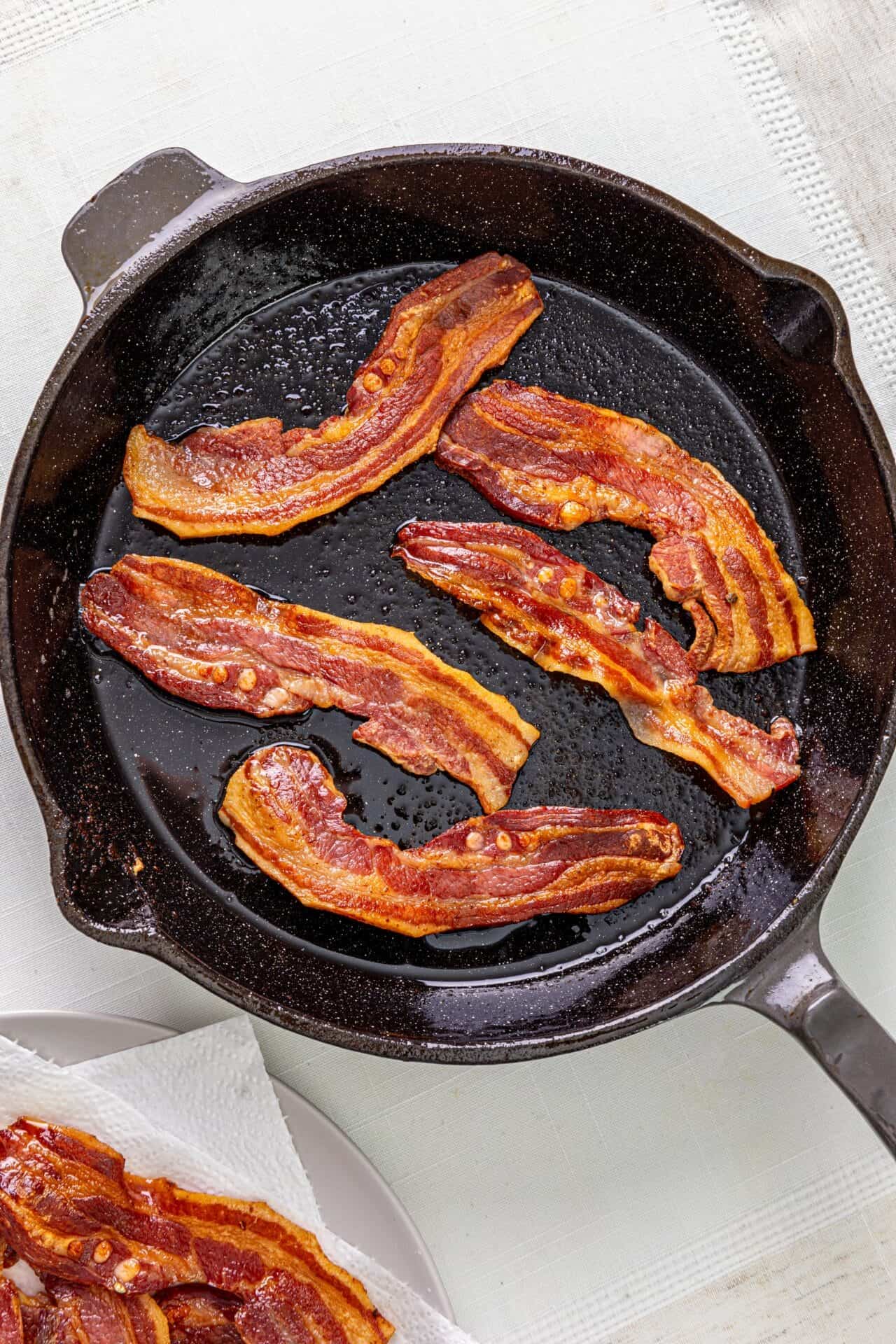
Pan-frying bacon is simple, fast, and gives control over texture. It renders fat into the pan. That fat flavors eggs, veggies, and sauces. Knowing how to cook bacon in a frying pan helps you adapt for breakfast, sandwiches, or recipes that need crispy bits.
Pan-frying also needs no special tools. A good pan and some attention make great bacon. I prefer this method when I want browning and quick cleanup.

Equipment and ingredients you need
- Heavy skillet or cast-iron pan for even heat distribution.
- Tongs or a spatula to flip slices safely.
- Paper towels or a wire rack to drain cooked bacon.
- Optional splatter screen to keep stove clean.
- Bacon slices (thin, regular, or thick-cut) and an optional bowl to catch grease.
Choose bacon that matches your goal. Thick-cut works well for chewy centers. Thin bacon crisps quickly. I keep a small jar for rendered bacon fat in the fridge for later use.
Step-by-step: how to cook bacon in a frying pan
- Prep the pan
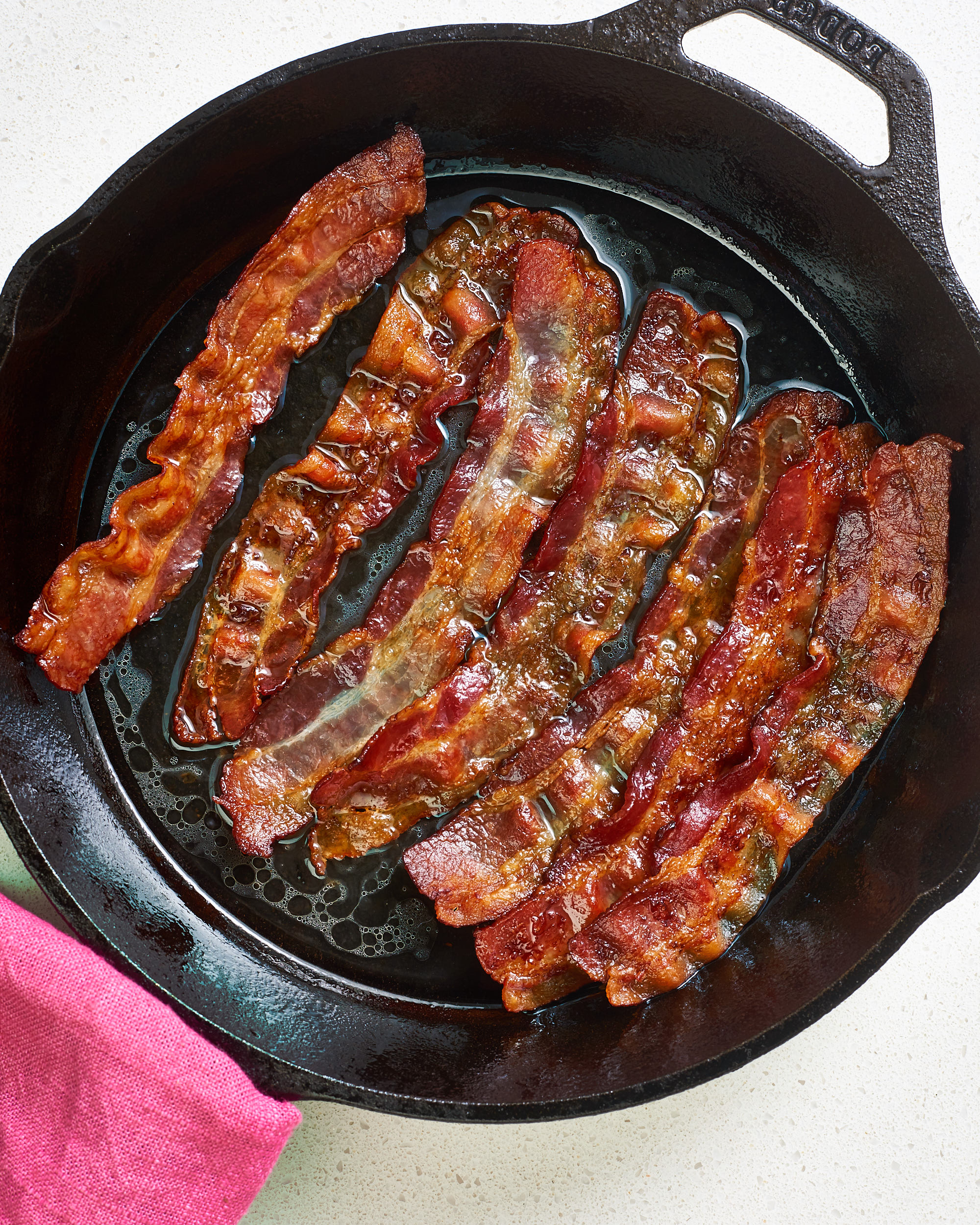
- Use a cold pan. Lay bacon strips in a single layer without overlap.
- Cold-start lets fat render slowly and prevents curling.
- Turn the heat to low-medium
- Start on low or medium-low heat. This controls rendering and browning.
- Adjust heat if bacon is spitting or browning too fast.
- Cook and flip
- Let bacon cook 4–6 minutes per side for regular slices. Thick-cut takes longer.
- Flip with tongs once or twice for even color. Don’t over-flip.
- Control crispness
- For chewier bacon, remove when slightly soft. For crispy, cook a bit longer until browned.
- Move done pieces to paper towels or a rack to drain and stay crisp.
- Finish and store fat
- Carefully pour hot fat into a heatproof jar or leave a tablespoon in pan for flavoring other dishes.
- Cool the pan before washing.
Timing note: how to cook bacon in a frying pan depends on slice thickness and stove power. Thin slices can finish in 6–8 minutes total. Thick cuts may need 12–15 minutes. Watch color, not time alone.

Tips for perfect crisp bacon every time
- Use a cold pan to start. This prevents sudden shrinkage and curling.
- Give each slice space. Crowding traps steam and makes bacon soggy.
- Cook low and slow. High heat burns edges before fat renders.
- Flip once or twice only. Too much handling breaks slices.
- Save rendered bacon fat. It’s great for frying eggs or roasting potatoes.
- Use a splatter screen to protect your stove and yourself.
- If you need to crisp all slices at once, finish briefly on a wire rack in a 400°F oven for 2–4 minutes.
From experience, the common mistake is rushing with high heat. I once burned a batch in three minutes by turning the burner high. Slow heat changed everything.

Safety, storage, and reheating
- Handle hot grease carefully to avoid burns. Always pour grease into a heatproof container.
- Store cooked bacon in the fridge for up to 4 days. Keep it in an airtight container or wrapped in paper towel.
- To reheat while keeping crispness, use a skillet over medium heat or a 350°F oven for 5–8 minutes. Microwaves soften bacon quickly.
- Raw bacon should be stored and cooked according to food-safety guidelines. Cook pork products to the proper safe internal temperature when required.
When you learn how to cook bacon in a frying pan safely, you reduce mess and get better flavor.

Simple recipes and ways to use pan-fried bacon
- Classic BLT: Toast bread, add lettuce, tomato, and pan-fried bacon for crisp texture.
- Bacon bits: Chop cooled bacon for topping salads, baked potatoes, or soup.
- Carbonara shortcut: Toss hot pasta with rendered bacon fat, eggs, and cheese for a quick sauce.
- Bacon-wrapped veggies: Pan-fry bacon a bit first, then wrap around asparagus and finish in the oven.
Knowing how to cook bacon in a frying pan opens many quick recipe options. I often cook extra bacon to add to lunches and salads during the week.

Common mistakes and how to avoid them
- Overcrowding the pan makes bacon steam instead of crisping. Cook in batches.
- Starting on high heat browns edges but leaves fat undone. Begin cold and keep heat moderate.
- Over-flipping prevents even browning. Flip only when a side is golden.
- Tossing grease down the sink can clog pipes. Wipe pan with paper towel or pour grease into a jar.
- Leaving bacon on a hot pan to sit will continue cooking and can burn slices. Transfer to a rack promptly.
Each mistake I made taught a fix. Patience and small adjustments gave me consistent results in how to cook bacon in a frying pan.

Frequently Asked Questions of how to cook bacon in a frying pan
How long does bacon take to cook in a frying pan?
Cooking time varies by thickness. Thin bacon usually takes 6–8 minutes total; thick-cut can take 12–15 minutes. Watch color and texture for doneness.
Should I start bacon in a cold or hot pan?
Start in a cold pan for best fat rendering and to avoid curling. Heating slowly gives even browning and crispness. High heat risks burning.
How do I keep bacon crispy after cooking?
Drain bacon on a wire rack or paper towels and serve right away. If needed, crisp briefly in a 350°F oven for a few minutes before serving.
Can I save and reuse bacon fat?
Yes. Strain cooled fat into a jar and refrigerate for up to a month. Use it for frying eggs, sautéing vegetables, or flavoring roasted potatoes.
Is pan-frying healthier than baking bacon?
Pan-frying and baking both produce similar fat content; baking can drain fat more efficiently if on a rack. Choose the method that fits your texture preference and cleanup needs.
How do I avoid grease splatter when frying bacon?
Use a splatter screen and maintain moderate heat. Tilt the pan slightly and spoon off excess fat if it gets too hot. Protective cookware helps reduce splatter.
Conclusion
Pan-frying bacon is an easy skill that pays off with crispy, flavorful results. Remember to start cold, cook low and slow, give slices space, and drain on a rack for the best texture. Save rendered bacon fat for future dishes and follow simple safety steps to prevent burns and mess.
Try these methods this weekend: pick your preferred bacon cut, follow the steps here, and tweak heat for your stove. If you liked this guide, leave a comment about your favorite bacon trick or subscribe for more practical kitchen tips.