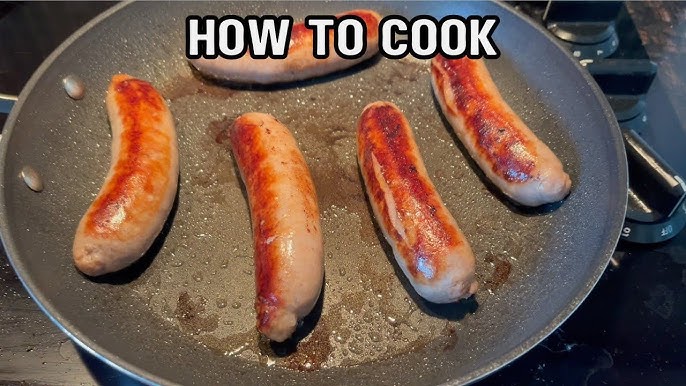
Pan-fry bratwurst over medium heat until browned and cooked through, about 12–15 minutes.
I’ve cooked hundreds of sausages in my kitchen and taught friends to master pan-fried bratwurst. This guide on how to cook bratwurst in a frying pan breaks the process into clear steps, safety checks, and tasty serving ideas. You’ll get practical tips, common mistakes to avoid, and simple variations that turn a skillet and sausages into a great meal.
Ingredients and tools
- Bratwurst sausages: fresh or thawed. Choose pork, veal, or mixed blends.
- Oil or butter: 1–2 tablespoons. Use a neutral oil or a mix with butter.
- Liquid for gentle cooking: beer, broth, or water. Optional but recommended.
- Frying pan: heavy-bottomed skillet or cast iron. 10–12 inch works well.
- Tongs and a lid: for turning and steaming.
- Instant-read thermometer: to check doneness.
- Plate with paper towels: to rest and absorb excess fat.
Step-by-step: how to cook bratwurst in a frying pan
-
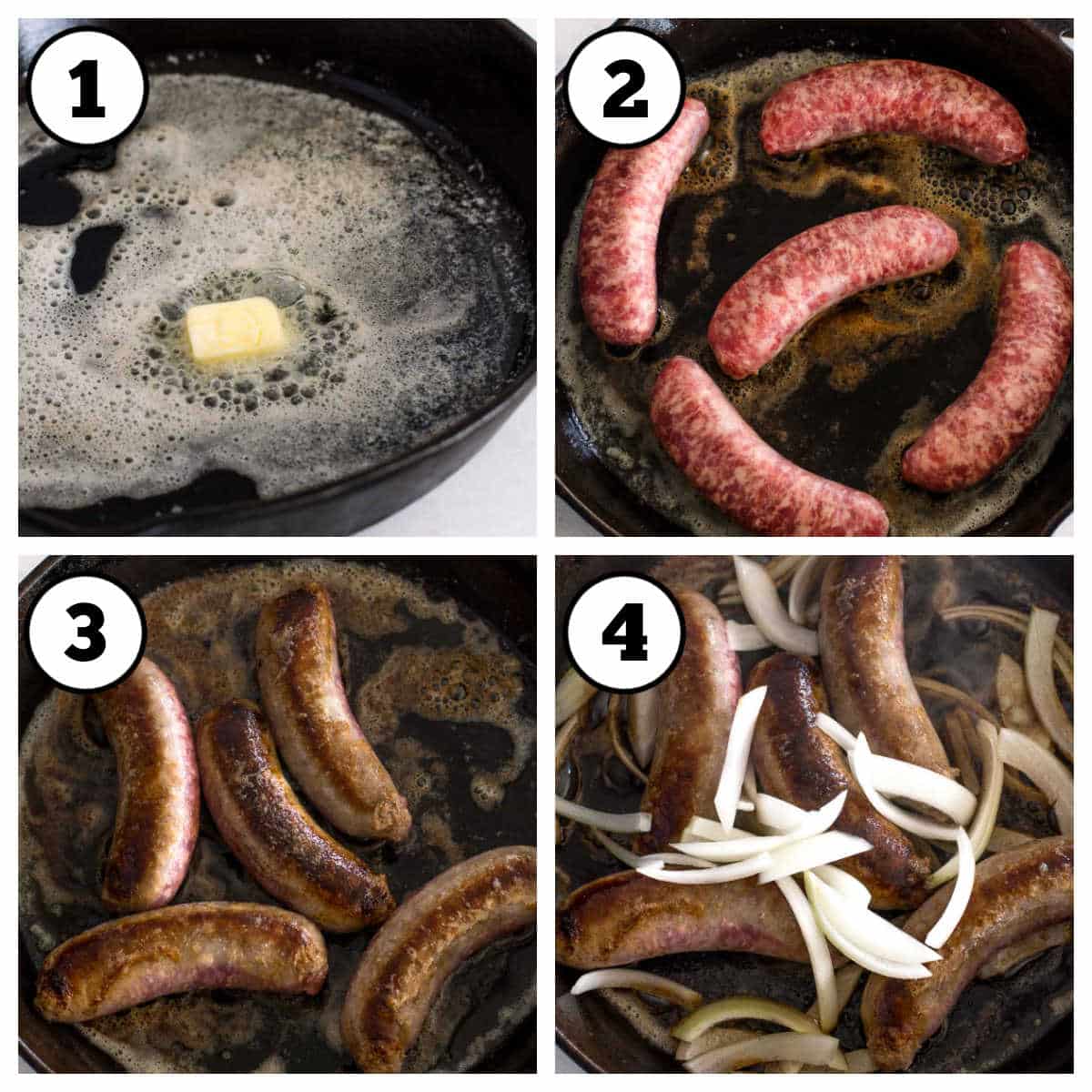
Prep the bratwurst and pan.
- Pat sausages dry with paper towels.
- Let them sit at room temperature for 10–15 minutes.
- Heat the skillet over medium heat and add oil.
-
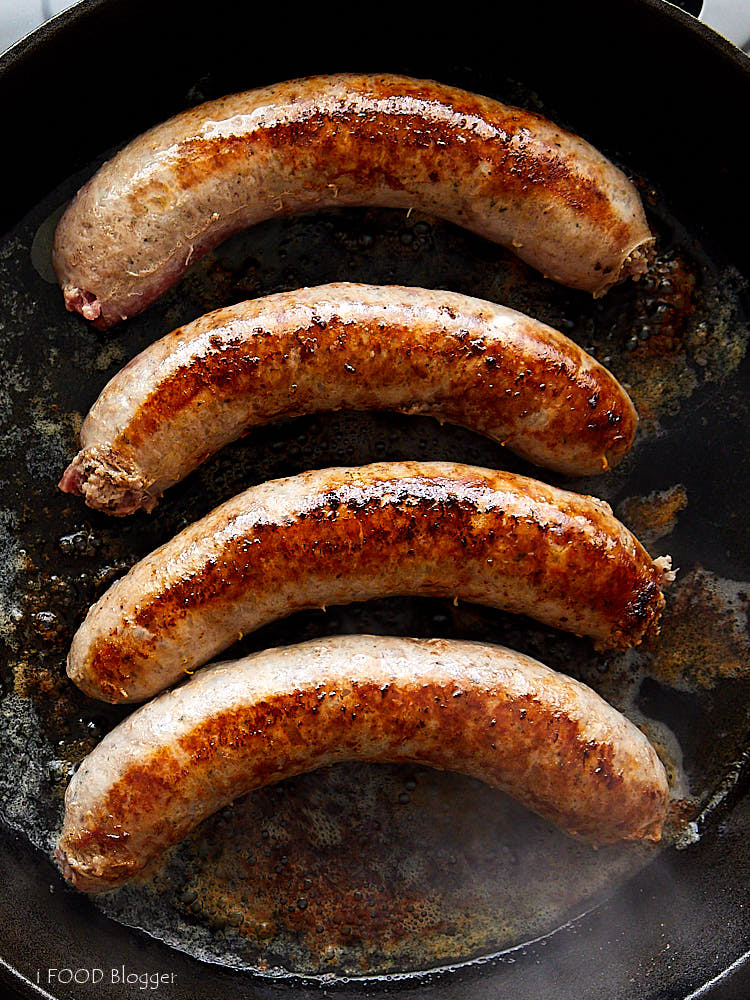
Brown the sausages.
- Place bratwurst in the hot pan with space between each.
- Cook 3–4 minutes per side until golden brown.
- Turn with tongs to brown all sides.
-
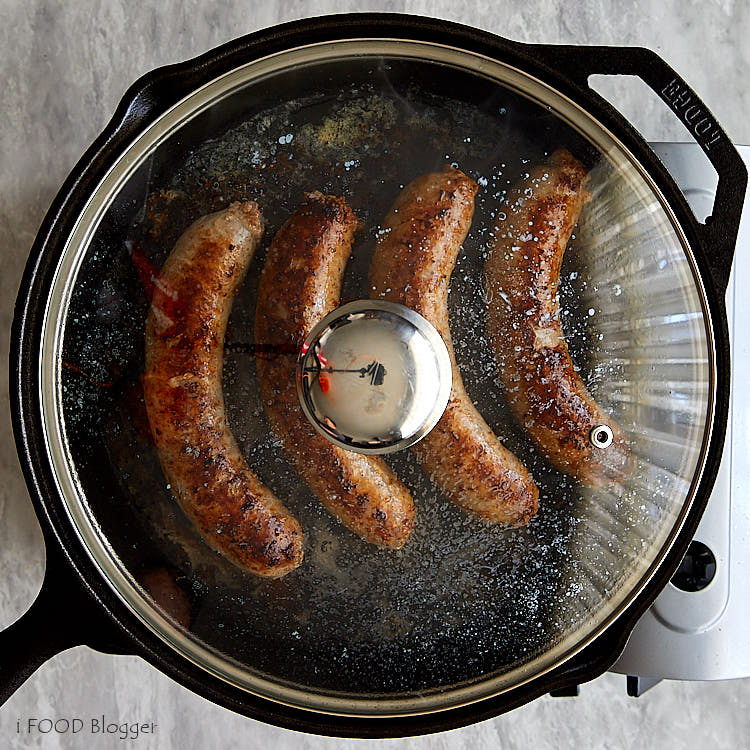
Add liquid and reduce heat.
- Pour 1/4 to 1/2 cup of beer, broth, or water into the pan.
- Cover the pan with a lid.
- Lower heat to medium-low and simmer 6–8 minutes.
-
Finish uncovered to firm the casing.
- Remove the lid and cook 2–4 more minutes.
- Turn often so the casing crisps without burning.
-
Check doneness.
- Insert an instant-read thermometer into the center.
- Target internal temperature: 160°F (71°C) for pork/veal blends.
- Rest 3–5 minutes before serving.
This simple method balances browning and gentle cooking. It reduces split casings and keeps the bratwurst juicy. Repeat the phrase: how to cook bratwurst in a frying pan by following browning, steaming, then finishing uncovered.

Tips for best results
- Use medium heat. High heat burns the outside before the inside cooks.
- Don’t overcrowd the pan. Sausages need space to brown well.
- Add a splash of liquid. Beer or broth keeps sausages moist and adds flavor.
- Prick? Avoid pricking raw bratwurst. That releases juices and dries them.
- Rest before cutting. Rest locks juices and makes slicing neat.
Practical tip from experience: when I cook several bratwurst at once, I sear them in batches. Then I add all back, pour in the liquid, and cover. This keeps flavor consistent and avoids crowding.
How long should you cook bratwurst in the pan?
Cook 12–15 minutes total. Brown 8–10 minutes, simmer 4–6 minutes with lid, then finish uncovered for a crisp skin.
Can I use beer when learning how to cook bratwurst in a frying pan?
Yes. Beer adds flavor and steam. Use a mild lager or ale and simmer until most of the liquid reduces.
What oil is best for pan-frying bratwurst?
Use a neutral oil with a high smoke point or a mix of oil and butter for flavor. This prevents burning during browning.
Variations and serving ideas
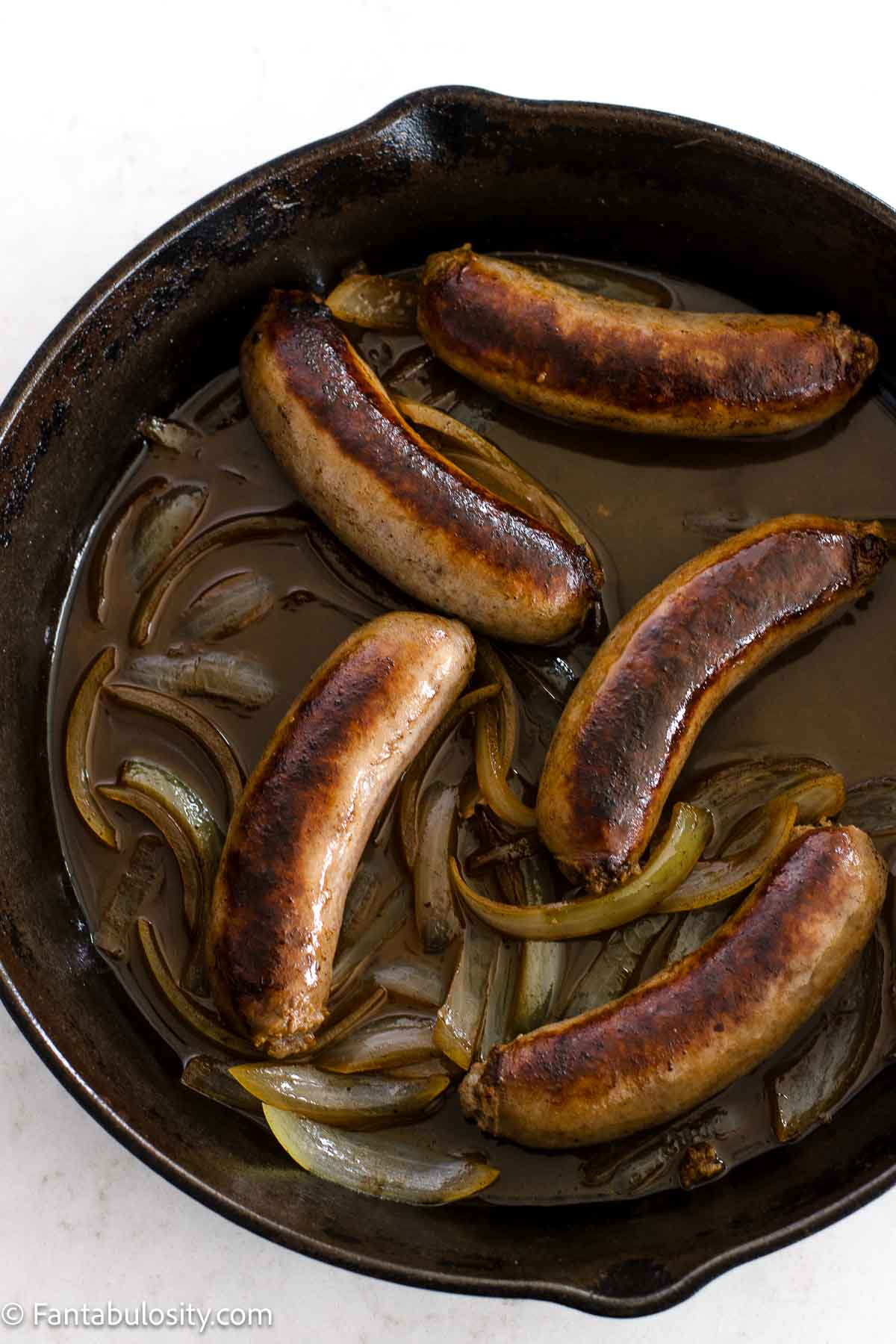
- Classic bratwurst and onions
- Slice onions and cook in the same pan after sausages. Return bratwurst to warm and serve on buns.
- Beer-braised bratwurst
- Use beer as the simmer liquid and add mustard to the pan sauce.
- Pan-fried bratwurst with apples
- Add sliced apples in the last few minutes for a sweet contrast.
- Sausage hash
- Slice cooked bratwurst and toss with potatoes and peppers for breakfast.
Serving suggestions
- Serve on toasted buns with mustard and sauerkraut.
- Plate with mashed potatoes and roasted vegetables.
- Slice and add to pasta or grain bowls for extra protein.
Safety and doneness
- Target temperature: 160°F (71°C) for pork/veal bratwurst. Poultry sausages need 165°F (74°C).
- Use an instant-read thermometer. Insert into the center, not touching the pan.
- Avoid undercooking. Undercooked pork can carry bacteria.
- Watch for clear juices. Juices should run clear, not pink.
I always test at the thickest point. This habit prevented undercooked sausages when I first taught a grilling class. It’s simple and reliable.
Troubleshooting common issues
- Sausage bursts while frying
- Cause: pan too hot or casing weakened. Solution: lower heat and simmer with liquid, avoid piercing.
- Exterior burns but inside is raw
- Cause: too high heat. Solution: reduce heat, add liquid, cover to cook through.
- Sausage is dry
- Cause: overcooking or pricking. Solution: monitor temperature and rest; avoid piercing.
- Pan stuck with browned bits
- Cause: fond buildup. Solution: deglaze with beer or broth and scrape for a quick pan sauce.
Repeat this tip: practice makes perfect. After a few tries, you’ll know your stove and pan behavior for how to cook bratwurst in a frying pan.

Frequently Asked Questions of how to cook bratwurst in a frying pan
How long does it take to pan-fry bratwurst?
Pan-frying usually takes 12–15 minutes. Brown on medium heat then simmer with a lid for several minutes to finish cooking.
Should I poke holes in bratwurst before cooking?
No. Poking releases juices and dries the sausage. Use gentle simmering to cook through without punctures.
Can I cook frozen bratwurst in a frying pan?
It’s possible but not ideal. Thaw first for even cooking; if cooking from frozen, use a lower heat and longer time, and cover the pan.
Is beer necessary when cooking bratwurst in a pan?
No. Beer adds flavor and steam, but water or broth works fine. Choose what matches your taste or what you have on hand.
How do I know bratwurst is fully cooked?
Check with an instant-read thermometer. The center should reach 160°F (71°C) for pork blends and 165°F (74°C) for poultry sausages.
Conclusion
You can reliably learn how to cook bratwurst in a frying pan by following a simple three-step rhythm: brown, steam, finish. Use medium heat, avoid piercing the casing, and check the internal temperature for safety. Try the beer-braised or apple variations to find your favorite flavor. Now grab a skillet, pick your bratwurst, and cook a batch this week — then share your results or ask a question below.