Yes, but only by using the other knife’s spine to realign the edge.
Sharpening a knife with a knife sounds bold, and it is. I have honed blades in kitchens, on trails, and in shops for years. In this guide, I explain the real method behind sharpening a knife with a knife, when it works, when it does not, and how to do it safely. If you want a clear, expert take with simple steps and field tips, you are in the right place.

What “sharpening a knife with a knife” really means
Sharpening removes metal to form a new edge. Honing realigns the edge you already have. Most times, sharpening a knife with a knife is not true grinding. It is a form of honing done with the blunt spine of another blade.
Two edges should never touch. When edges collide, they chip. The safe trick is to use the unsharpened spine of a second knife like a honing steel. It smooths and nudges the rolled edge back in line. This can bring back bite fast. It will not fix a fully dull or chipped edge.
Steel matters. Many kitchen knives sit between 56 and 62 HRC on the Rockwell scale. Hard edges hold shape. Softer spines can burnish them. You need some hardness difference for this to work well. That is why sharpening a knife with a knife is a stopgap, not a full service.

When you should (and should not) try it
Sharpening a knife with a knife is handy in a pinch. Think camp sites, fishing docks, or a rush on the line when no tools are near. If your blade has lost bite but is not blunt, a few safe passes can help. It works best on straight edges.
Skip this method when the edge has chips, dents, or heavy dullness. Do not use it on serrated knives. Avoid it on very hard blades if the other knife is as hard or harder. And avoid it on rare or thin knives that you love. Save those for proper stones or a pro.
For best results, clean both blades first. Grit can scratch and score steel. Oil or water is not needed for this method.
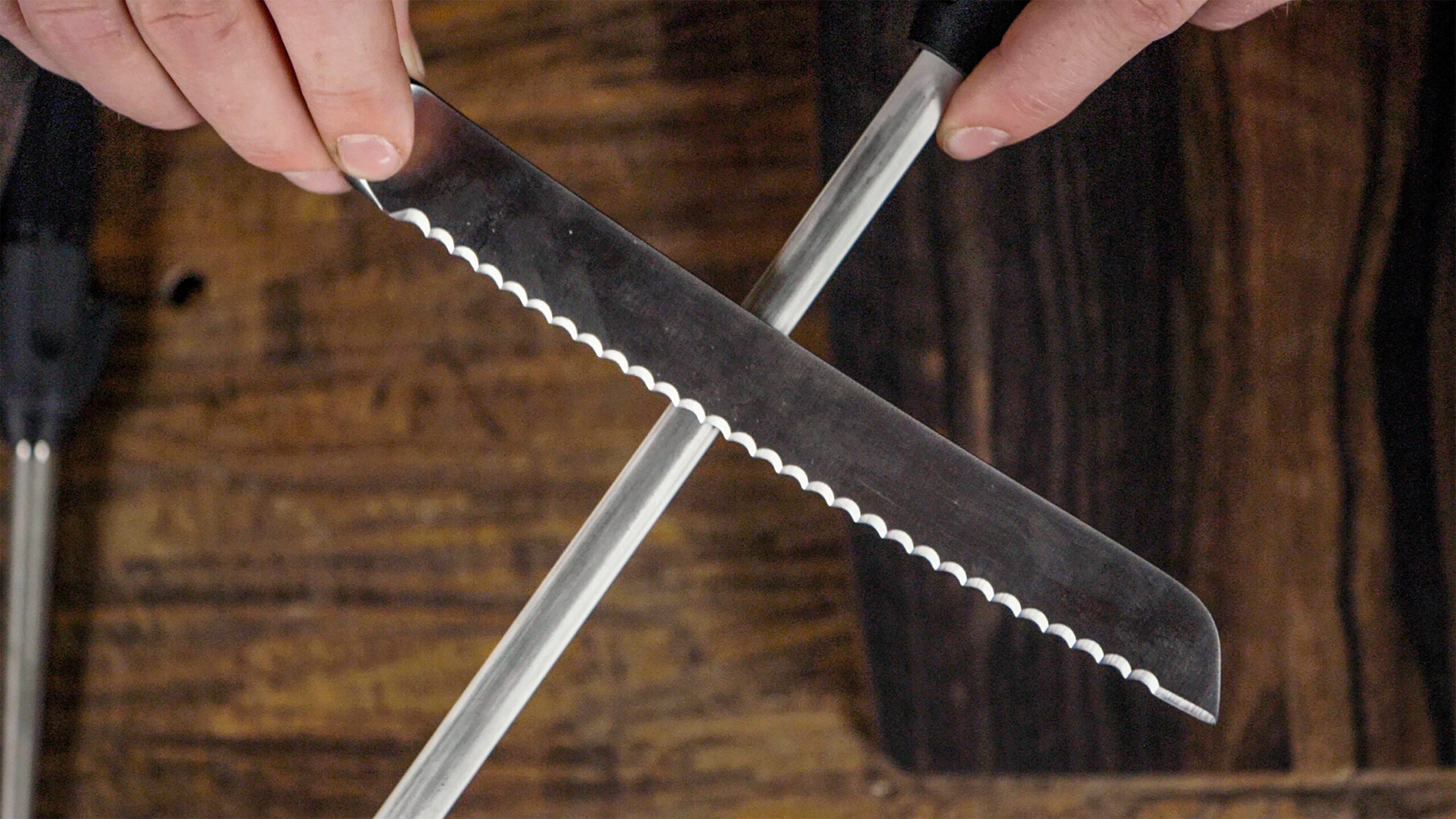
How to do it safely: step-by-step
Here is the right way to mimic a honing steel with another knife’s spine. This is the only safe path for sharpening a knife with a knife.
- Hold the second knife by the handle. Turn it so the spine faces up. Plant your elbow. Keep the spine steady.
- Set the working knife’s edge on the spine at 15 to 20 degrees. That is about two stacked coins for a thin chef’s knife.
- Use edge-trailing strokes. Think “spine leads, edge follows.” Draw the edge from heel to tip, sliding away from the edge, not into it.
- Make light, even passes. Do 5 to 10 on one side. Switch sides. Keep the angle the same.
- Feel for a tiny burr. If you feel a whisper of drag on one side, do two light passes on that side to even it out.
- Wipe and test on paper or a tomato. If it bites, you are done. If not, repeat with gentle strokes.
- Finish with 5 very light alternating passes. This sets a small micro-bevel that can last longer.
Pro tip: If the other knife has a square, smooth spine, it works best. A rounded or soft spine still helps, but with less control. Do not press hard. Pressure kills edges.

What not to do (and why)
Never rub edge against edge. That is like crashing two saws. It chips both blades and can send slivers flying. Do not saw back and forth with force. Do not “tap” edges together. You will not sharpen. You will break down the apex.
Metallurgy tests show that real sharpening needs abrasive action. Stones, diamonds, and ceramic remove steel. The spine of a knife is not an abrasive. It only burnishes. So sharpening a knife with a knife cannot set a new bevel on a dull blade. It is a quick fix, not a cure.
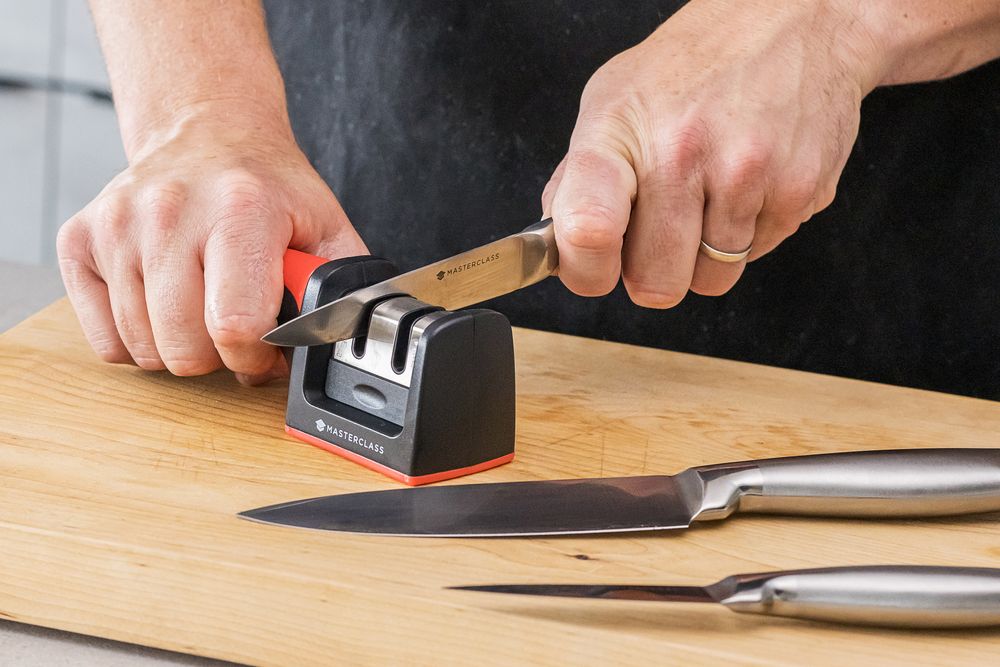
Better field alternatives when no tools are near
Sharpening a knife with a knife works in a rush. But many common items beat it for edge work. Here are easy options you can use right now.
- Unglazed ceramic mug or plate rim. Flip the mug. Use the rough ring like a fine stone. Use light strokes at 15 to 20 degrees on both sides. Strop on cardboard after.
- Car window top edge. The bare glass at the top of a car window has bite. Use gentle edge-trailing strokes. Then strop on a belt.
- Leather belt or cardboard. These polish and align. They do not grind, but they add bite. Strop 20 to 40 passes a side.
- Fine sandpaper on a flat board. Use 600 to 1,000 grit. Keep the angle. Make slow, even strokes. Strop after.
- Smooth river stone. Pick a fine, flat one. Add a splash of water. Use light, even passes.
Each of these gives more abrasive action than a knife spine. They are still simple and safe.

How sharp can you get with this method?
With proper strokes, sharpening a knife with a knife can bring back a working edge. Expect better bite for slicing fruit, paper, and rope. It will not give a mirror polish or a hair-whittling edge.
Edge tests help. A clean slice through newsprint is a good sign. A tomato that splits under the blade’s weight shows a keen bite. If the edge still slips, you need a real stone session.
Edge life matters too. A burnished edge can feel sharp fast but fade sooner. Finish with a few light passes and a strop. That boosts life and control.

My hands-on notes from the trail and the line
I first tried sharpening a knife with a knife on a three-day hike. My paring knife rolled after cutting hard salami. I used the spine of my pocket knife. Ten light strokes a side brought back clean cuts for dinner. It held through the trip.
In a busy kitchen, I once had no steel within reach. I used a spare chef’s knife as the hone. I learned three things fast. Keep the angles low and even. Use almost no pressure. Strop on a towel or cardboard to finish. Since then, I only use this move for short fixes.
Big mistakes I see often: people press too hard, chase speed, and touch edges together by accident. Slow is smooth. Smooth is sharp.

Steel basics, care, and edge life
Not all steels act the same. Softer steels realign with less work. Harder steels resist rolls but can chip if abused. Stainless fights rust but can feel more slick on a hone. High carbon takes a fine edge fast but needs care.
For daily care, wipe and dry after use. Store edges so they do not hit other tools. Use a wood or plastic board. A few licks on a real honing steel each day keep edges in line. Use stones or a guided system for true sharpening.
When you rely on sharpening a knife with a knife, keep it rare. It is safe if done right. But it is not a stand-in for stones. Think of it as a seatbelt, not a race harness.

Frequently Asked Questions
Can you actually sharpen a knife with another knife?
You can bring back bite by honing on the spine of another knife. It does not replace stones for true sharpening, but it helps in a pinch.
Is rubbing two knife edges together a good idea?
No. Edge-on-edge contact chips and dulls both blades fast. Always use the other knife’s spine, not its edge.
What angle should I use for this method?
Aim for 15 to 20 degrees per side for most kitchen knives. Keep the same angle on each pass for even results.
How many strokes do I need?
Start with 5 to 10 light strokes per side. Test, then finish with 3 to 5 very light alternating passes.
Will this work on serrated knives?
No. Serrations need special rods that fit the scallops. Use a tapered ceramic rod or send it to a pro.
What if my knife is very dull or chipped?
Use real abrasives like stones, diamond plates, or ceramic. Sharpening a knife with a knife will not fix chips or a blunted bevel.
Does steel type matter here?
Yes. A slightly harder edge and a softer spine make honing easier. Equal hardness pairs may show less effect.
Conclusion
Sharpening a knife with a knife is a smart emergency move when you use the spine as a hone. It is quick, safe, and can wake up a tired edge. It will not rebuild a bevel or mend chips, but it can save a meal or a trip.
Put the steps into practice today. Try five gentle spine strokes per side, then a simple strop. For long-term gains, learn to use a stone and strop well. Want more field-ready edge tips? Subscribe, ask a question, or share your own test in the comments.