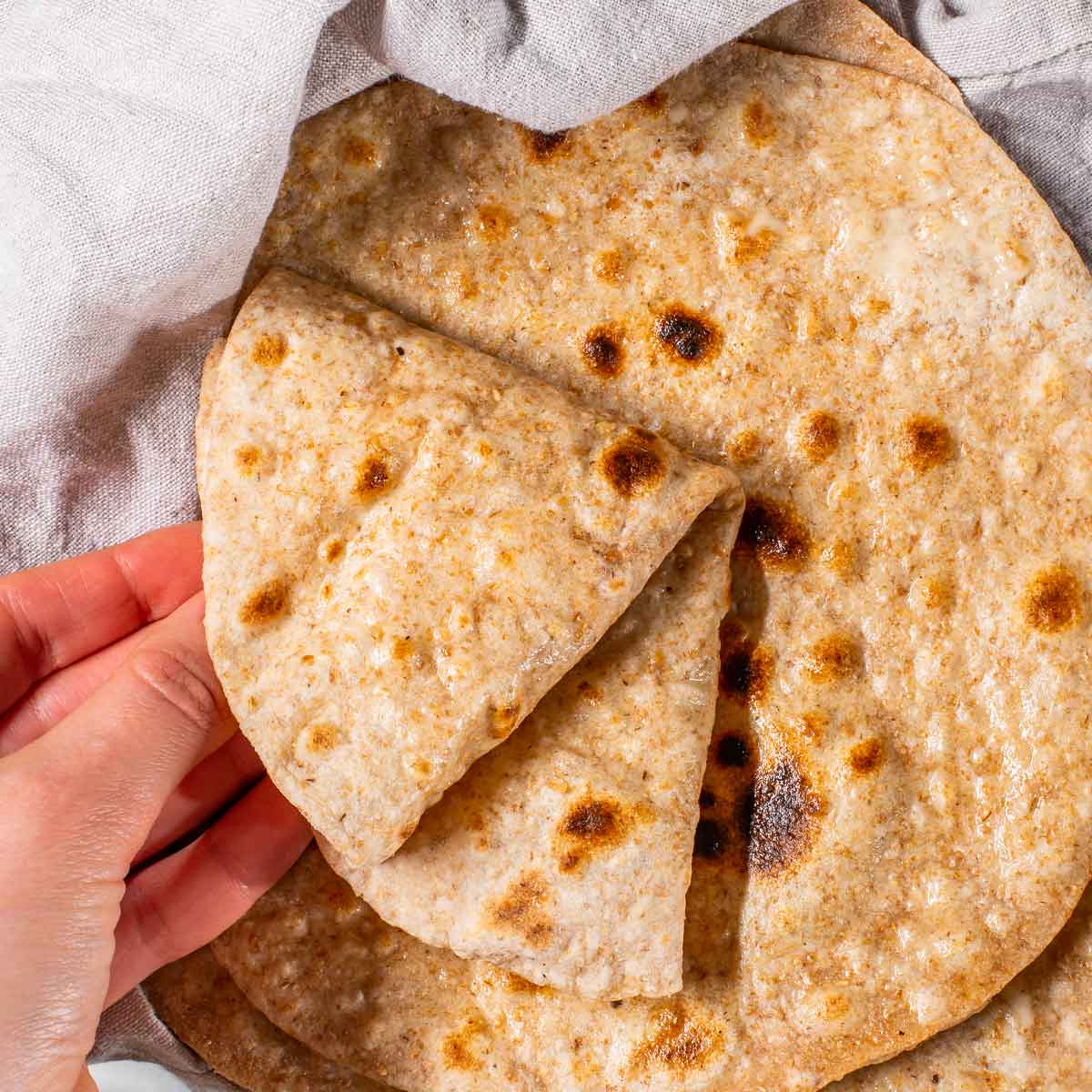
Mix atta with water, knead, rest, roll thin, cook on high heat.
If you want to know how to make roti bread that stays soft and puffs well, you are in the right place. I grew up around hot tawas, quick hands, and the sound of puffed rotis. In this guide, I will show you how to make roti bread with clear steps, simple science, and real tips that work in a home kitchen.

What Is Roti, Exactly?
Roti is a simple flatbread made with whole wheat flour, called atta. It has no yeast. It cooks fast on a hot pan or tava. It is light, soft, and bends with ease.
Good roti comes from three things. The right dough. The right roll. The right heat. If you want to learn how to make roti bread that tastes like home, start with the basics and build small habits that stick.
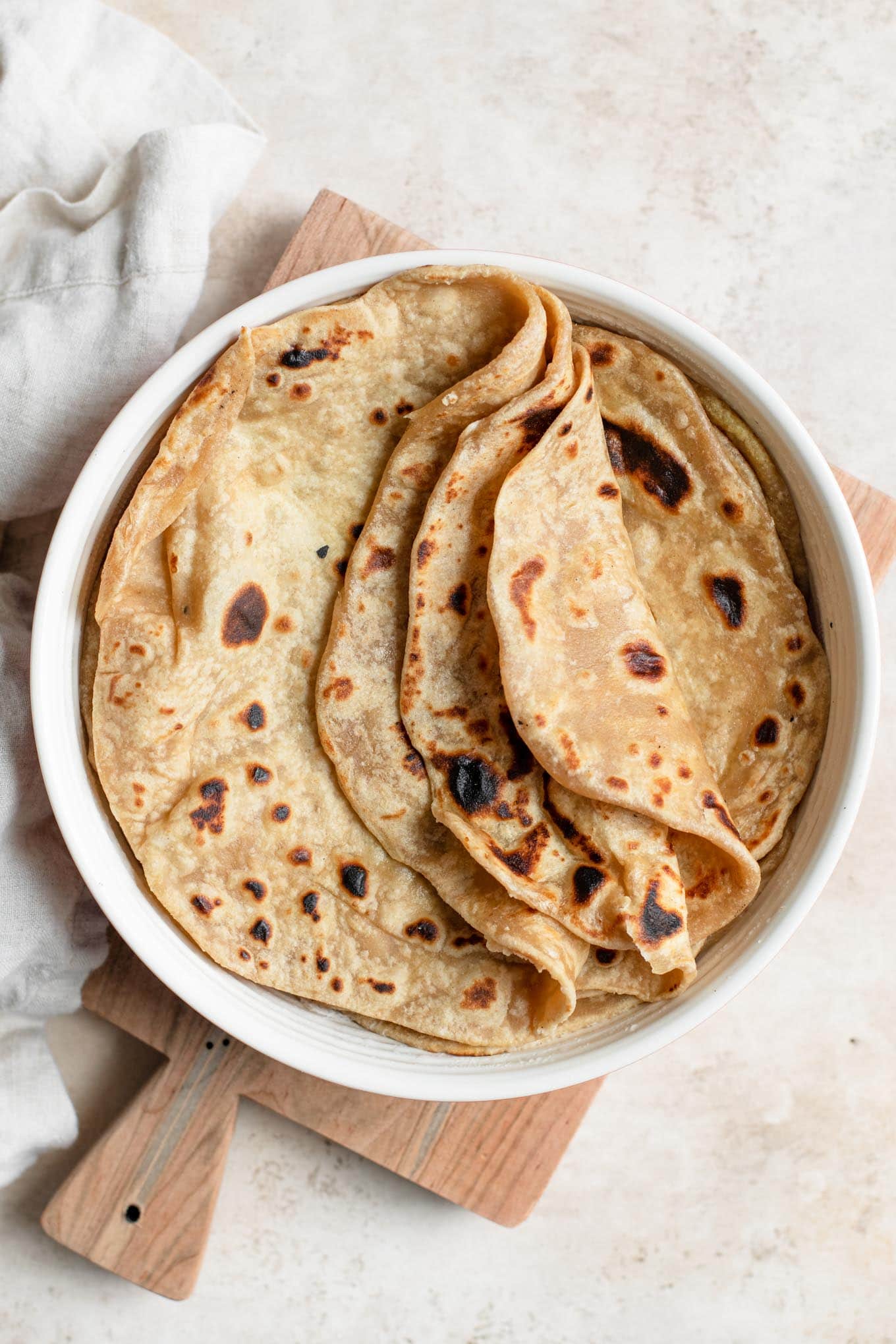
Ingredients and Tools You Need
Start with fresh flour and clean water. That is most of the work done. Before you learn how to make roti bread, gather these simple tools.
- Whole wheat flour (atta) Use 2 cups or 260 g.
- Water Start with 3/4 cup or 180 g. Add more as needed.
- Salt A small pinch. About 1/4 teaspoon.
- Oil or ghee 1 teaspoon for the dough is optional. More for brushing.
- Tava or heavy pan Cast iron or steel holds heat best.
- Rolling pin A light, smooth pin works great.
- Tongs For flipping and puffing over flame.
- Bowl and clean cloth For mixing and resting.
Dough tip from my kitchen: Atta brands drink water in different ways. Good dough feels soft and springy. It should not stick, but it should not feel tight.
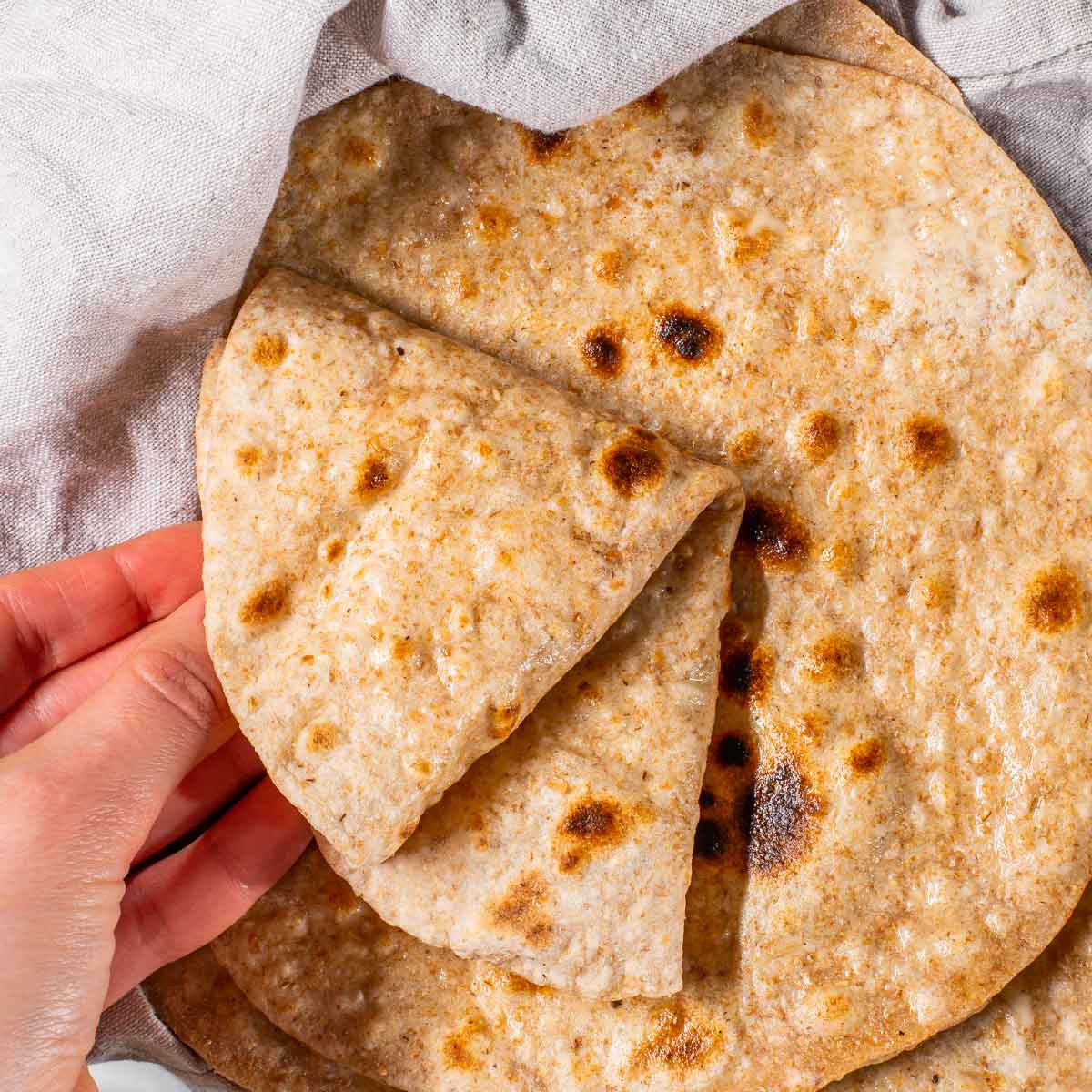
Step-by-Step: How to Make Roti Bread at Home
Make the dough
- Add flour and salt to a bowl. Mix well.
- Add half the water. Stir with fingers.
- Add more water a little at a time. Pull the dough together.
- Knead for 6 to 8 minutes. Use the heel of your palm.
- The dough should be soft and smooth. Not wet. Not dry.
- Rest the dough, covered, for 20 to 30 minutes.
Why the rest helps: Rest lets the flour drink water and relax. This makes rolling easy and keeps roti soft.
Portion and roll
- Divide dough into small balls. Aim for golf-ball size.
- Dust each ball in dry flour. Shake off extra flour.
- Roll from the center out. Turn the disc a bit after each pass.
- Aim for 6 to 7 inches wide. Keep it even and thin at the edges.
Rolling cue: If the disc pulls back, the dough is tight. Let it rest a few minutes, then roll again.
Cook on the tava
- Heat the tava on medium-high. It should be hot before you start.
- Place the rolled roti on the pan. Wait for small bubbles on top.
- Flip. Cook the second side for 15 to 25 seconds.
- Flip again. Press edges with a cloth or spatula. It should puff.
- Brush with ghee if you like. Keep in a covered basket.
Timing tip: Each roti cooks in about 45 to 60 seconds. Fast heat. Fast flips. That is how to make roti bread that stays soft.
Puffing over open flame (optional)
- After the second flip, lift with tongs and place over a low gas flame.
- It should balloon in 2 to 4 seconds. Turn once. Remove at once.
No gas stove? Press the edges with a folded cloth on the pan. That helps steam build and puff the roti.

Techniques For Soft, Puffed Rotis
Here is how to make roti bread that feels soft for hours.
- Hydration Aim for a soft dough. About 60 to 70% water by flour weight.
- Rest Give the dough at least 20 minutes to relax.
- Heat Use a heavy pan. Preheat it well. Medium-high is ideal.
- Thickness Keep it thin and even. Thick spots block steam.
- Gentle dusting Use only a little dry flour to roll. Extra flour makes dry rotis.
- Flip fast Do not overcook. Dark spots are fine. Dry, brittle patches mean the heat is too low or time is too long.
- Steam lock Stack hot rotis in a cloth-lined basket. Cover to trap steam.
Personal note: I learned that one extra flip can kill a puff. When in doubt, pull it off early. The carryover heat will finish the job.
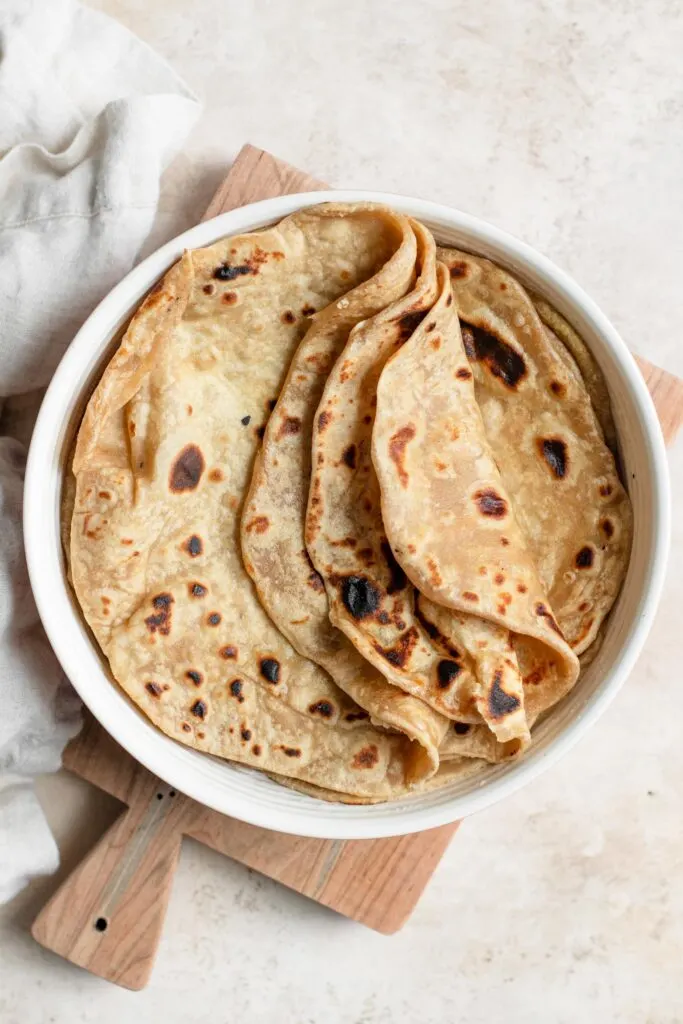
Variations You Can Try
You can change small things to match taste and tools. This is how to make roti bread your own.
- Phulka A dry-cooked roti that puffs fully over open flame.
- Chapati Same idea as roti, often thinner and without ghee.
- Tandoori roti Made with part maida and atta. Cooks on hot tandoor walls.
- Missi roti Add gram flour, spices, and herbs. It is rich and rustic.
- Multigrain Mix atta with millet flours. Add a touch more water.
Gluten-free note: Roti needs gluten to puff. If you use millet or rice flour, add psyllium husk or a little oil. Expect less puff but good flavor.

Nutrition, Storage, and Reheating
Roti is simple food. It gives steady energy and fiber. One 7-inch roti (no ghee) is about 90 to 110 calories. It has carbs, some protein, and iron from whole wheat.
Storage
- Same day Best fresh. Keep in a lined basket.
- Next day Wrap and chill for up to 2 days.
- Freeze Stack with paper between. Freeze for 1 to 2 months.
Reheat
- On a hot pan 20 to 30 seconds per side.
- Over low flame 1 to 2 seconds for a quick steam puff.
- Avoid the microwave if you can. It can make roti tough.
Dough storage tip: Dough stays fine in the fridge for 24 hours. Brush with a little oil and cover well. This is how to make roti bread after work with no stress.

Troubleshooting and Pro Tips
Here are fixes I learned the hard way. They also answer common search questions on how to make roti bread.
- My dough cracks when rolling Add a splash of water. Knead for 1 to 2 minutes. Rest again.
- Rotis do not puff Check heat first. Use higher heat and roll thinner at the edges.
- Rotis turn dry or hard Reduce cook time. Use less dusting flour. Cover at once after cooking.
- Dough sticks to the pin Use a light dusting of flour. Or wipe the pin with a drop of oil.
- Uneven color Preheat the pan longer. Cold pans bake, hot pans blister in spots. You want the latter.
- Can I use all-purpose flour You can. Mix half atta and half all-purpose for softer rotis.
- No tawa Use a heavy skillet. Cast iron works best. Heat is the key in how to make roti bread on any pan.
- Want extra softness Add 1 teaspoon oil to the dough. Or brush ghee on hot rotis.
- Batch cooking Roll a few at a time. Keep them covered so they do not dry out.
- Practice flow Cook one while you roll the next. This is how to make roti bread fast for a family.

Frequently Asked Questions of how to make roti bread
How much water should I use for roti dough?
Start with about 60 to 70% water by flour weight. Add more only until the dough feels soft and smooth.
Why don’t my rotis puff up?
Check heat first. A hot pan and even rolling let steam build and puff the roti.
Can I make roti without a gas stove?
Yes. Use a hot pan and press the edges with a cloth to help puff. It works well with practice.
Is oil or ghee needed in the dough?
No, it is optional. A small amount can make the roti feel softer and add flavor.
How thin should I roll roti?
Roll to about 1/16 inch, or 6 to 7 inches wide from a small dough ball. Keep the edges slightly thinner than the center.
Can I use all-purpose flour instead of atta?
You can, but texture will change. Mix half atta and half all-purpose for a softer, mild roti.
How do I store leftover rotis?
Cool, wrap, and chill for two days, or freeze with paper between rotis. Reheat on a hot pan for best results.
Conclusion
You now know how to make roti bread with a soft bite and a clean puff. Keep the dough soft, roll even, and cook hot and quick. Those three moves change everything.
Start small. Make a half batch today. Time your flips. Note what works. Share fresh rotis with someone you love. If this guide helped, subscribe for more home-cooking lessons, or drop a comment with your best tip or your next roti win.