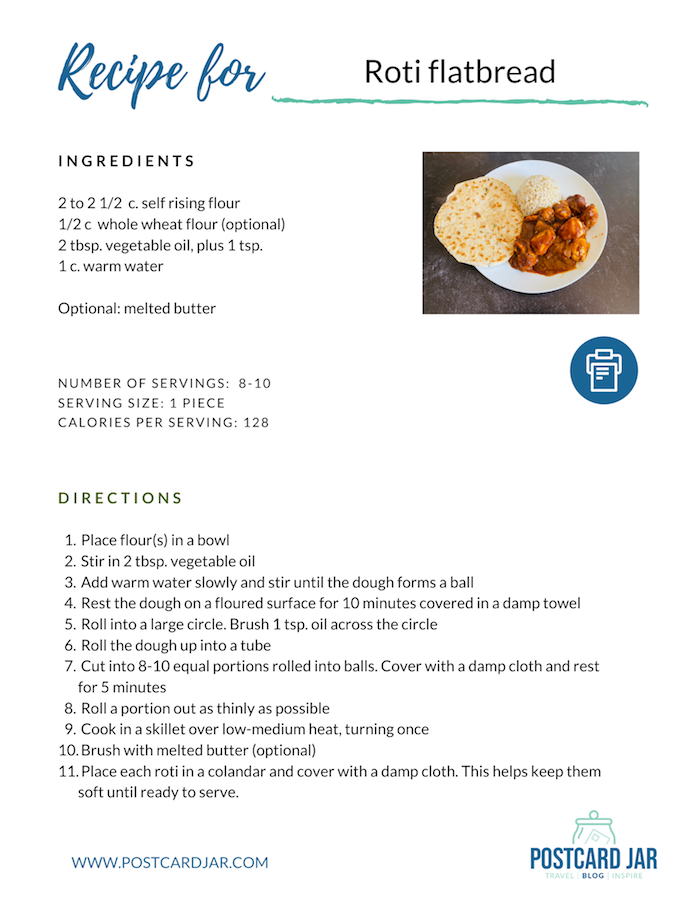
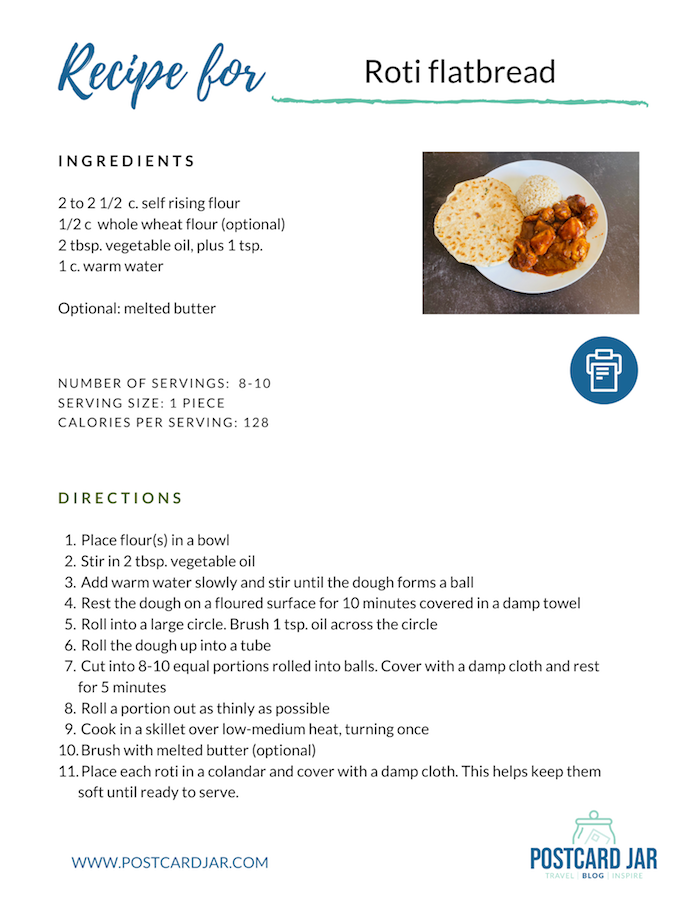
Mix atta with water, knead, rest, roll thin, cook and puff on flame.
If you want soft, puffed roti every time, you’re in the right kitchen. I’ve spent years testing how to make roti at home and on the road, from gas burners to electric coils. In this guide, I break down how to make roti with simple steps, the science behind soft dough, and pro tricks to get that cloud-like puff. Stay with me, and you’ll master how to make roti today.
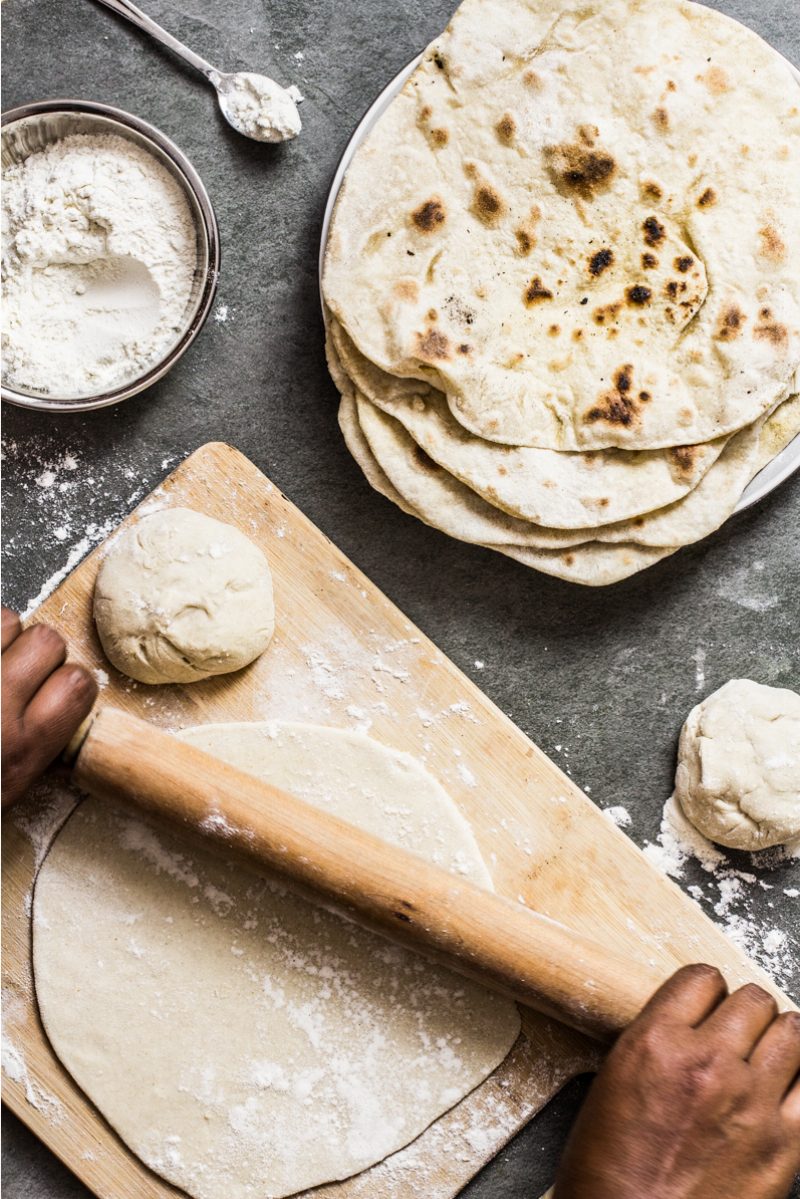
What Is Roti? And Why It Matters
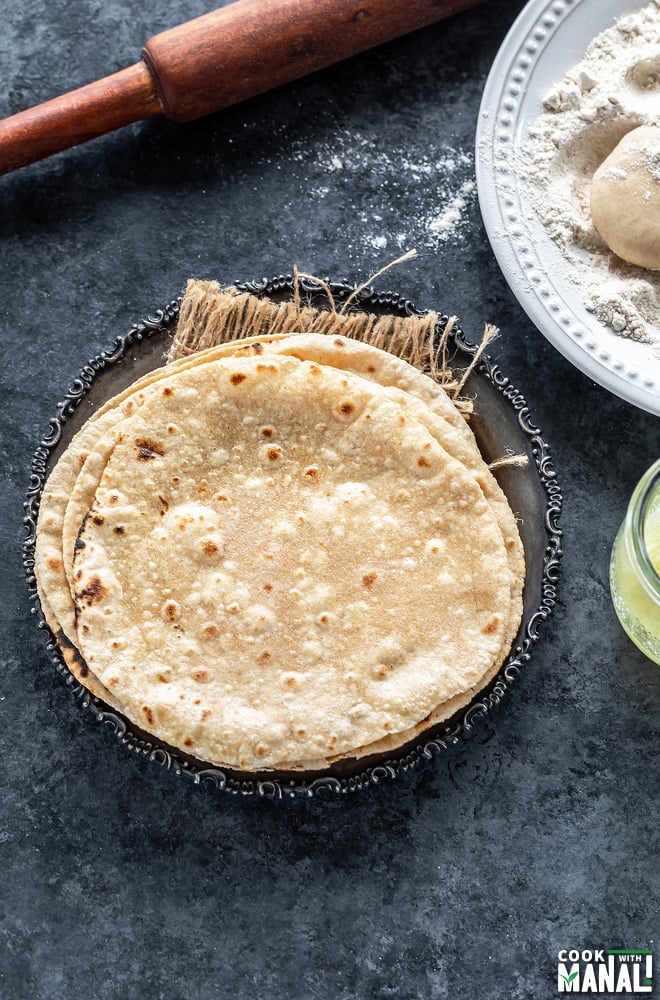
Roti is a round, unleavened flatbread made from whole wheat flour called atta. It is a daily bread in many South Asian homes and pairs with almost any curry, dal, or stir-fry. When done right, it is soft, pliable, and puffs with steam.
You might hear roti, chapati, or phulka used in similar ways. In many kitchens, roti and chapati are the same. Phulka is a thinner roti that puffs on direct flame. No matter the name, how to make roti follows the same core steps.
Texture relies on fresh flour, the right water ratio, gentle kneading, and quick heat. That is why learning how to make roti is part skill and part feel. With a few tries, your hands will know when the dough is perfect.
Ingredients and Tools You Need
You only need a few basics to start how to make roti with confidence. Keep it simple, and use fresh flour for the best taste.
Ingredients
- Whole wheat atta, 2 cups
- Warm water, about 3/4 cup to 1 cup (adjust as needed)
- Salt, a pinch (optional)
- Oil or ghee, 1 teaspoon for the dough (optional), plus more for brushing cooked roti if you like
Tools
- Mixing bowl
- Rolling pin and a flat board or clean counter
- Tawa or heavy skillet (cast iron or carbon steel)
- Tongs
- Clean kitchen towel for resting dough
Pro tip from my kitchen: stone-ground atta absorbs more water than all-purpose flour. If you swap in part all-purpose, start with a little less water. When learning how to make roti, proper flour and a heavy pan make the biggest difference.
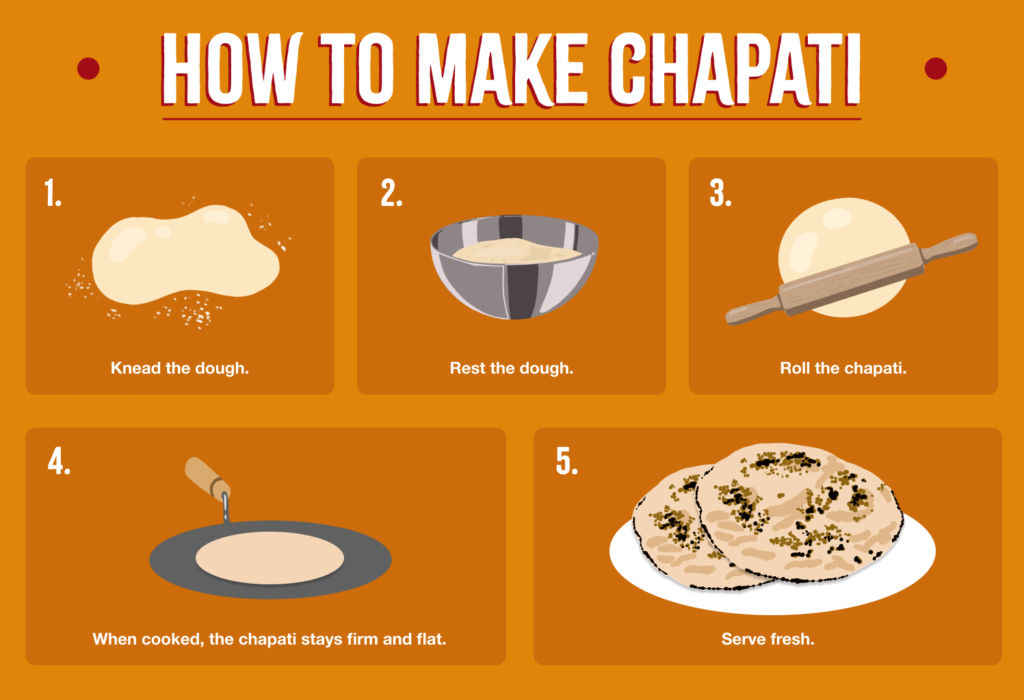
Step-by-Step: How to Make Roti
Follow these steps to master how to make roti. The steps are short, but each one matters.
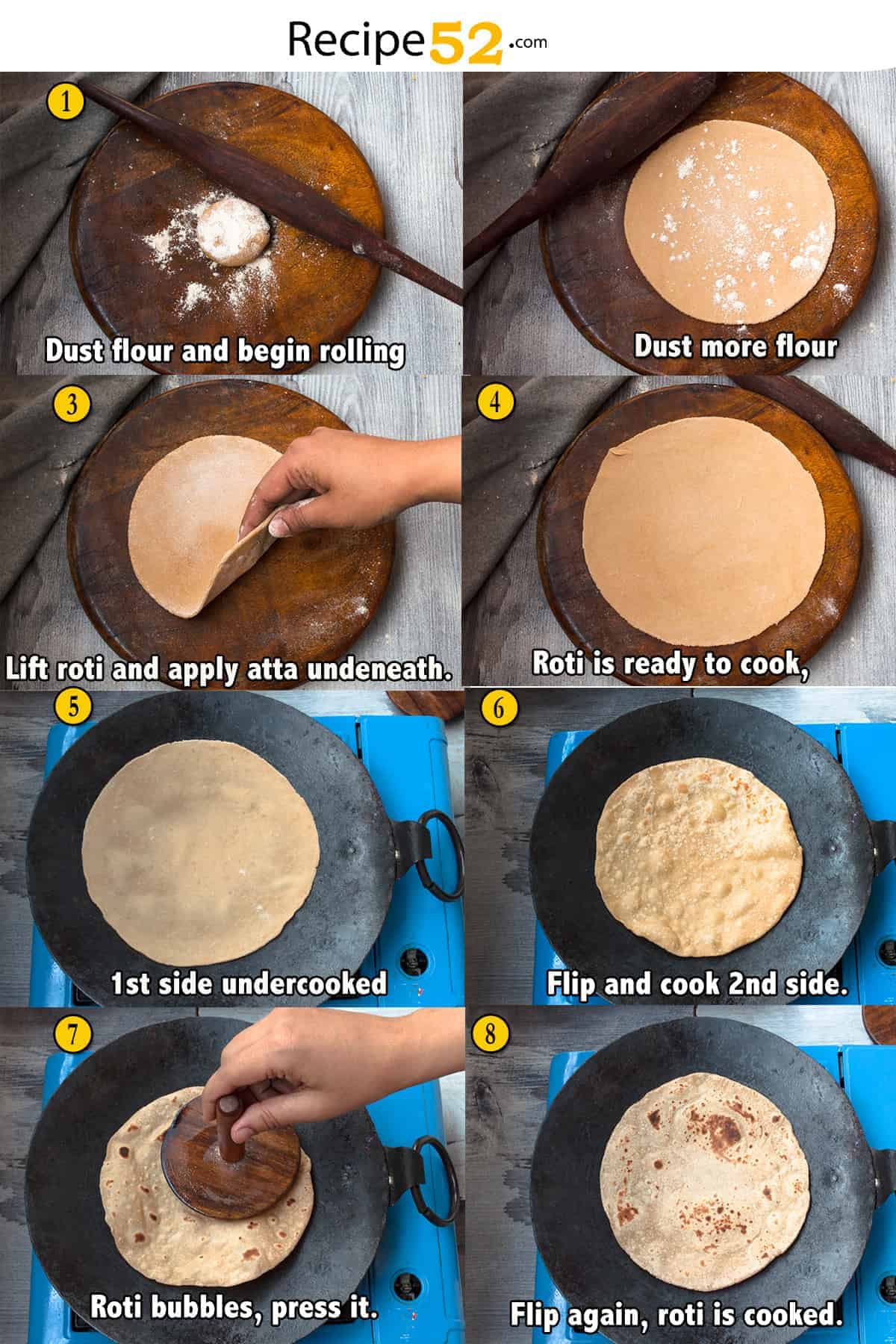
- Make the dough
- Add atta and salt to a bowl. Drizzle in warm water a little at a time.
- Mix with fingers until shaggy. The dough should be soft, not sticky.
- Knead 3 to 5 minutes until smooth. Add a few drops of oil if you like.
- Rest the dough
- Cover and rest 20 to 30 minutes. This relaxes gluten and makes soft roti.
- Divide and roll
- Split dough into golf-ball pieces. Keep covered so they do not dry.
- Dust with dry flour. Roll from center out to 6–7 inches wide. Rotate as you roll.
- Keep edges even. Aim for thin and uniform.
- Preheat the pan
- Heat tawa on medium-high. It should be hot before the first roti goes on.
- Cook the first side
- Place roti on the hot pan. Bubbles will form in 10–20 seconds.
- Flip when light spots appear, about 20–30 seconds.
- Cook the second side
- Let it cook 20–30 seconds until more brown spots show.
- Puff it up
- Flip again. Press edges with a cloth or spatula to push steam to the center.
- If you have gas, lift with tongs to the open flame for 3–5 seconds to puff.
- Finish and keep warm
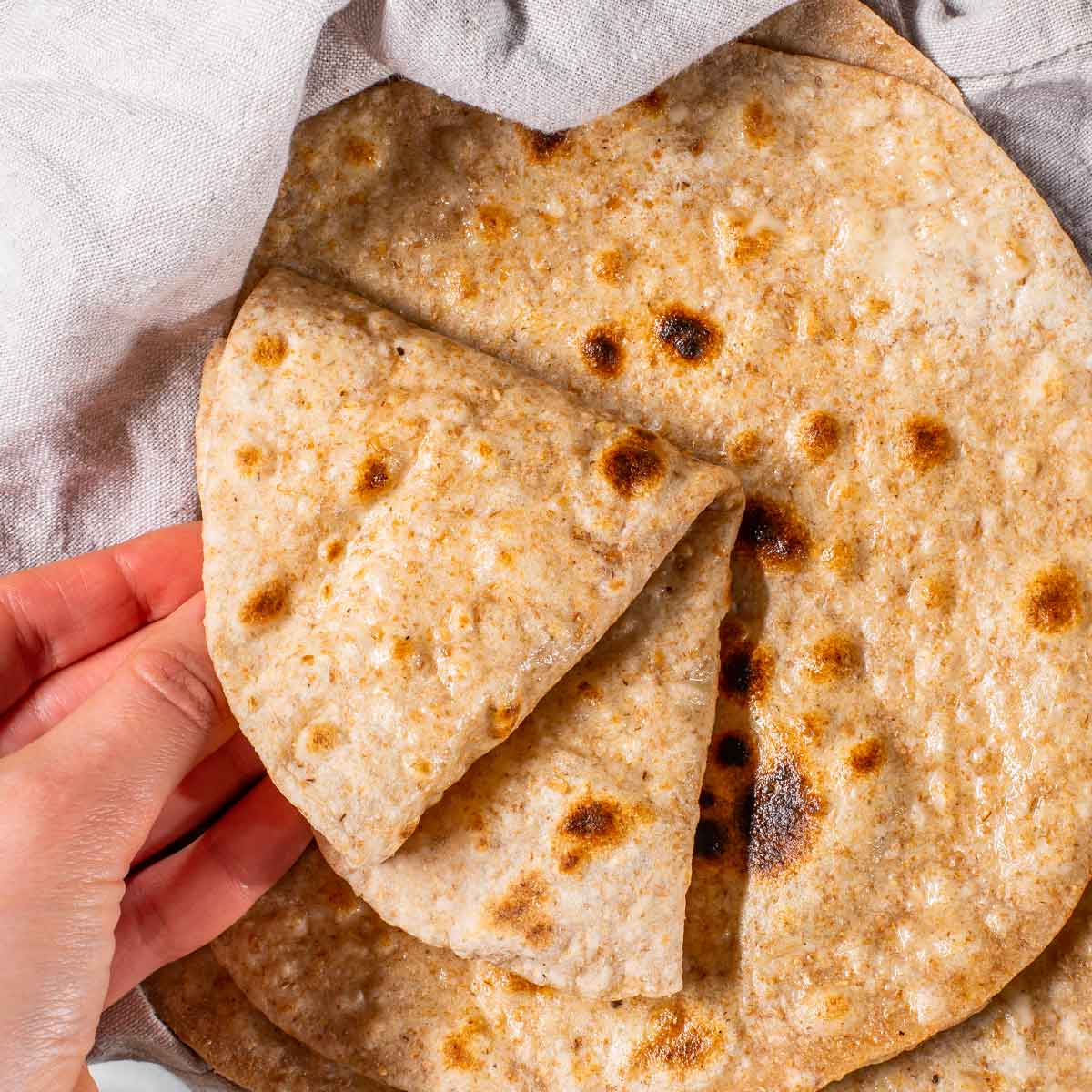
- Remove and brush with ghee if you like. Wrap in a towel to keep soft.
For electric stoves, you can hold a metal trivet over the coil and puff on that. With practice, how to make roti becomes quick, smooth, and fun.
The Science: Flour, Hydration, and Gluten
Understanding the dough is the heart of how to make roti. It is simple chemistry you can feel in your hands.
Flour types
- Whole wheat atta is fine-milled and makes flexible roti.
- Multigrain or coarse flours absorb more water and can feel drier.
Hydration sweet spot
- Start with about 60–70% water by weight of flour.
- Warmer water helps flour absorb better and gives a softer crumb.
Kneading and rest
- Knead just until smooth and elastic. Over-kneading can make it tough.
- Resting relaxes gluten and makes rolling easier and roti softer.
From many test batches, I’ve learned that small changes in water or rest time show up on the plate. If you want to refine how to make roti, track water amounts and rest time for a week. You will see a clear pattern.
Common Mistakes and Easy Fixes
When learning how to make roti, these quick fixes save the day.
- Dough too sticky: Dust with a little flour and knead briefly. Next time, add water slower.
- Dough too dry or cracking: Wet your hand and knead in a splash of water. Rest longer.
- Roti not puffing: Roll more evenly, cook the first side less, and use higher heat at the end.
- Hard roti: Overcooked or rolled too thick. Increase heat and reduce time.
- Burnt spots: Pan is too hot. Lower heat slightly and preheat for less time.
These small tweaks can turn a flat, dense roti into a soft, puffed one in your very next try. How to make roti well is about fast feedback and calm hands.

Techniques to Puff Roti Like a Pro
Puffing looks like magic, but it follows clear steps. Steam needs a sealed pocket and quick heat.
- Roll evenly so steam can expand the center.
- Cook the first side only until pale spots show. Do not brown it yet.
- On the second side, wait for more spots, then flip and press the edges.
- Finish over open flame for a dramatic, full puff if you can.
On trips, I’ve used a camping burner and even a hot plate. With steady heat and an even roll, I could still get a gentle puff. This is the heart of how to make roti that feels light and tender.

Variations, Diet Needs, and Flavor Upgrades
You can change how to make roti to suit your taste or diet.
Flavor and texture
- Phulka: Very thin roti that always puffs over flame.
- Tawa roti: Cooked fully on pan, no direct flame.
- Brush with ghee, olive oil, or coconut oil for flavor.
Diet swaps
- 50–50 atta and all-purpose: Softer, lighter roti, easier to roll.
- Multigrain atta: Nutty taste; add a touch more water.
- Gluten-free: Use sorghum or millet flour with psyllium husk. Expect less puff, but good flavor.
Add-ins
- Finely chopped herbs or ground spices for a hint of aroma.
- Warm milk or yogurt in place of part water for a softer bite.
These options keep how to make roti fresh and fun while meeting your needs.

Storage, Reheating, and Food Safety
Make extra roti and save time on busy nights. Safe storage keeps them soft and tasty.
Short-term
- Keep cooked roti wrapped in a towel, then in a covered container. Eat within 6 hours at room temp if the room is cool and dry.
Refrigerate
- Store in an airtight box up to 3 days. Separate with parchment to prevent sticking.
Freeze
- Stack with parchment and freeze up to 1 month. Reheat on a hot pan.
Reheating
- Warm on a hot tawa 20–30 seconds each side. Brush with a little water for steam if dry.
This plan supports weekly meal prep and helps you repeat how to make roti without waste.
Nutrition, Serving Ideas, and Pairings
Roti made with whole wheat is a source of fiber, iron, and B vitamins. One 6-inch roti has about 70–100 calories, depending on thickness and ghee. It is a simple, clean carb base that pairs with many proteins.
Serve with
- Dal, chana masala, or rajma for plant protein.
- Grilled chicken, paneer tikka, or stir-fried veggies.
- A quick raita or cucumber salad for crunch and coolness.
When teaching friends how to make roti, I always add a light salad on the side. It balances the plate and keeps the meal bright.
Frequently Asked Questions of how to make roti
How to make roti soft and not dry?
Use enough water, rest the dough for 20–30 minutes, and avoid overcooking. Keep cooked roti wrapped in a towel to trap steam.
What flour is best for roti at home?
Whole wheat atta is ideal due to its fine grind and absorption. Look for fresh, stone-ground flour for softer results.
Can I learn how to make roti on an electric stove?
Yes. Use a heavy pan for steady heat, and puff on a metal trivet or with firm presses on the pan.
Why doesn’t my roti puff?
Uneven rolling, low heat, or overcooking the first side can stop puffing. Roll evenly and use higher heat for the final puff.
How to make roti without oil or ghee?
Skip fat in the dough and after cooking. The key to softness is proper hydration and resting, not oil.
How thin should I roll roti?
Aim for 1–2 millimeters, about the thickness of a credit card. Even thickness helps it puff and cook fast.
Can I make the dough ahead?
Yes, up to 24 hours in the fridge. Bring to room temperature and knead briefly before rolling.
Is roti gluten-free?
Traditional atta roti is not gluten-free. For gluten-free roti, use millet or sorghum with a binder like psyllium.
Conclusion
You now know how to make roti with confidence: a soft dough, a short rest, an even roll, and fast heat. Small choices add up, from flour freshness to how long you cook the first side. With a few practice rounds, you will feel the dough and watch the puff rise.
Grab your atta, heat the pan, and make your first batch today. If this guide helped, share it, subscribe for more home-cooking tips, or drop a comment with your roti wins and questions.