Hold the angle, raise a burr, then refine and polish both sides.
If you want a fast, safe, and repeatable way to slice like a pro, you need to know how to use knife sharpener the right way. I’ve sharpened knives in home kitchens and in busy restaurants, and I’ll show you clear, simple steps that work. We’ll cover how the tools work, what angles to use, and the exact moves that turn a dull blade into a smooth cutter you can trust.
Why a sharp knife matters
A sharp knife is safer than a dull one. It needs less force and is easier to control. Your cuts are clean, food looks better, and cooking gets faster and more fun.
Sharpening also protects your blade. Small chips and rolls form at the edge over time. Smart care fixes them before they grow. If you wonder how to use knife sharpener for better food and less stress, this is your guide.
How a sharpener actually works
Sharpeners use abrasives to shave metal and form a fine edge. Grit size controls how fast this happens. Coarse grits fix chips. Medium grits shape the edge. Fine grits polish it.
Angle is the key. Hold a steady angle on both sides to form a tiny V. You should raise a burr on one side, then flip and repeat. That burr is proof you reached the apex. Learn how to use knife sharpener by feeling for that burr with care.

Types of knife sharpeners and when to use them
There is no single best tool. Pick what fits your skill, time, and knives.
- Whetstones. Most control and best results. They take practice but give top edges.
- Guided pull-through. Easy and quick. Good for most Western knives.
- Electric sharpeners. Fast and repeatable. Great for busy homes, but remove more steel.
- Honing rods. Not true sharpeners. They realign the edge between sharpenings.
If you are new and want to learn how to use knife sharpener with control, start with a 1000/3000 or 1000/6000 whetstone combo.

Tools and setup
Set the stage so the edge comes out right and you stay safe.
- A stable surface. Use a damp towel under your stone or unit.
- Good light. You need to see the scratch pattern and burr.
- Marker pen. Color the bevel to track your angle.
- Clean water or oil. Follow what your stone maker says.
- Towel and bandage. Be ready and careful.
I show my students how to use knife sharpener with a marker test first. It proves you are hitting the bevel, not the shoulder.

Step-by-step: how to use knife sharpener with different tools
Whetstone method
- Soak water stones if needed. Splash-and-go stones need only a quick wetting.
- Set the stone on a damp towel.
- Color the bevel with a marker.
- Hold 15–20 degrees for Western knives, 12–15 for many Japanese knives.
- Push and pull in short strokes. Use light to moderate pressure.
- Work tip, belly, and heel in sequence.
- Check the marker line and feel for a burr along the full edge.
- Flip the knife. Repeat the same count and pressure.
- Move to a finer grit. Use lighter strokes to polish.
- Finish with 3–5 very light alternating strokes per side.
Personal tip: In my first restaurant job, I rushed and pressed hard. The edge felt sharp but died fast. When I learned to lighten up on the last passes, edges started to last days, not hours.
Guided pull-through sharpener
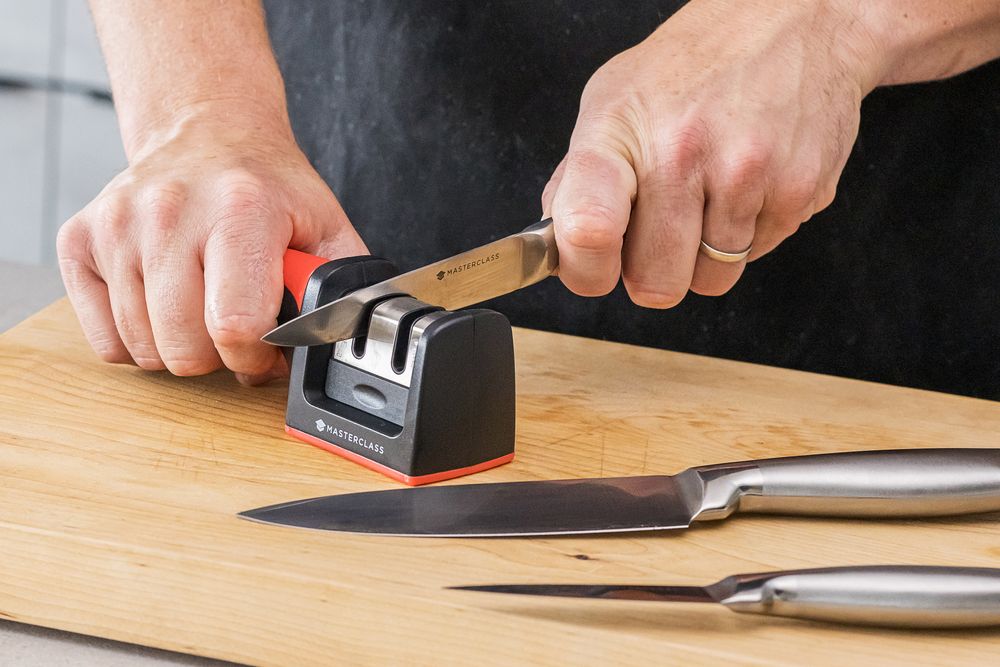
- Place the unit on a stable counter.
- Start with the coarse slot if the knife is dull.
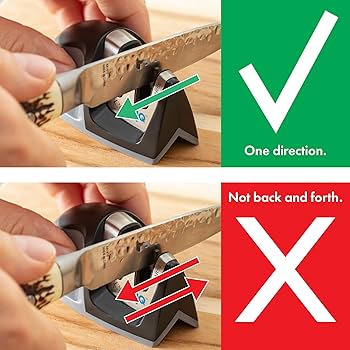
- Pull the knife straight through, heel to tip, without pressing down hard.
- Repeat 5–8 times. Switch to the fine slot for polishing.
- Wipe the blade and test on paper.
Electric sharpener
- Read the angle spec for your model.
- Turn it on and use the coarse stage only if the blade is very dull.
- Draw the knife through each side at a slow, even pace.
- Move to the fine stage. Use fewer passes.
- Clean the blade. Test the bite on a tomato skin.
Honing rod for upkeep
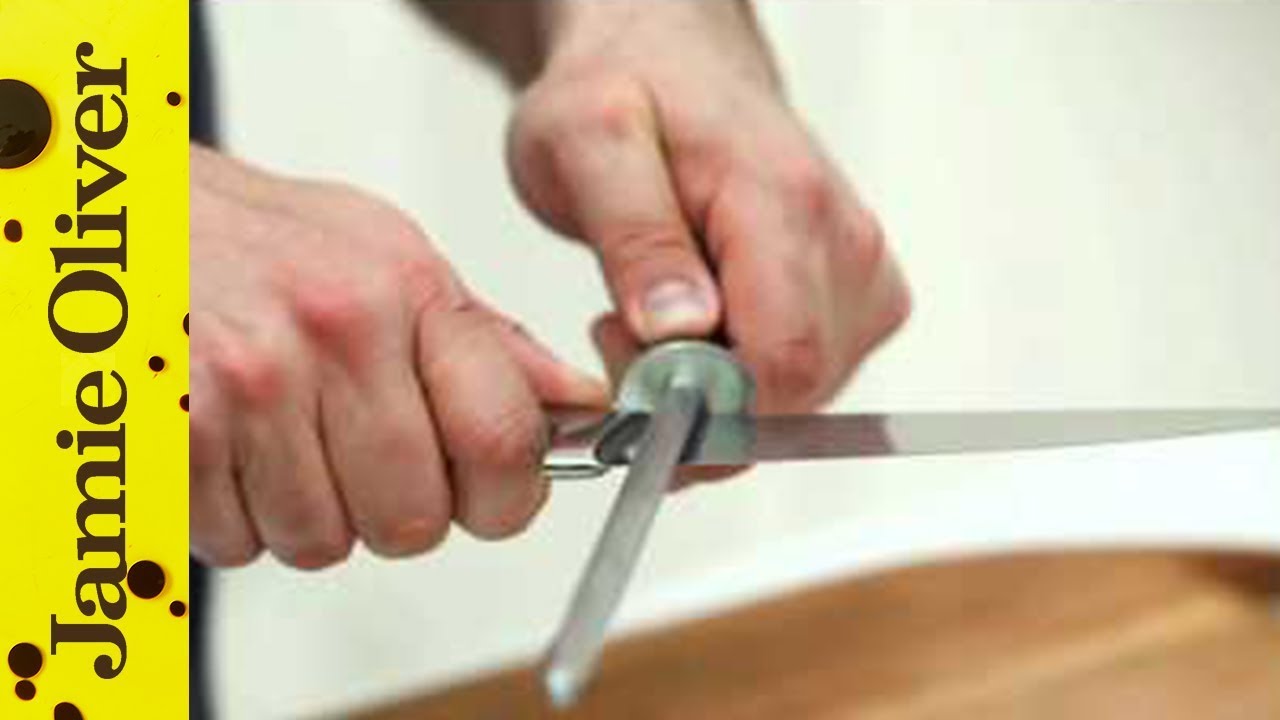
- Hold the rod tip on a towel.
- Sweep the knife down at about 15–20 degrees.
- Do 5–8 light strokes per side.
- Hone before each cooking session to keep the edge aligned.
This is the fastest path to learn how to use knife sharpener in real life. Start slow, count strokes, and keep the angle steady.

Angles, strokes, and the burr
- Western chef’s knives. 15–20 degrees per side. Durable and easy to maintain.
- Japanese gyuto, petty, or santoku. 12–15 degrees per side. Sharper, more delicate.
- Heavy cleavers. 20–25 degrees per side. Built for hard work.
How many strokes? Start with 10 per side on a medium stone. Check for a burr along the full length. When you feel it, move on. The burr should be even and small. If you chase the burr for too long, you may make a wire edge that folds fast.
Angle hacks when learning how to use knife sharpener:
- Use two stacked coins near the spine as a visual guide on the stone.
- Color the bevel. Remove all marker at your target angle.
- Lock your wrist. Move from your shoulder for smoother passes.

Testing sharpness and finishing moves
- Paper test. Slice printer paper, heel to tip, in one slow cut.
- Tomato test. The blade should break the skin with a gentle push.
- Arm hair test. Try shaving a tiny patch. Do this with care.
To boost bite and edge life, add a strop:
- Use clean leather or a strop loaded with fine compound.
- Pull the knife spine-first 5–10 times per side.
- Keep the angle just under your sharpening angle.
If you ask how to use knife sharpener for lasting edges, stropping is the secret step many skip.

Care, maintenance, and storage
Take care of the edge you just made.
- Wipe blades dry after use. Water and acids dull edges fast.
- Use wood or soft plastic boards. Glass and stone boards kill edges.
- Store in a block, sheath, or on a magnetic strip. Avoid drawers.
- Clean stones. Flatten water stones with a lapping plate when they dish.
- Empty and clean swarf trays on electric units.
Set a simple rule: if the knife starts to slide on a tomato, it is time to hone. If honing no longer helps, it is time to sharpen. This habit keeps how to use knife sharpener part of your normal routine.

Common mistakes to avoid and quick fixes
- Too much pressure. Fix by using lighter strokes, especially on fine grits.
- Changing angles mid-stroke. Fix by slowing down and locking your wrist.
- Skipping grits. Fix chips on coarse first, then refine in steps.
- No burr. Fix by staying longer on the first side until the burr is even.
- Overheating on electrics. Fix by slowing down and reducing passes.
If you slip or feel unsure about how to use knife sharpener, stop and reset. A fresh start beats a rushed mistake.
Frequently Asked Questions of how to use knife sharpener
How often should I sharpen my kitchen knife?
For home cooks, sharpen every 2–3 months and hone before each use. If you cook daily or cut lots of hard items, sharpen monthly.
What grit stone should I buy first?
A 1000 grit stone shapes a working edge. Pair it with a 3000–6000 grit for polish, and you can handle most jobs.
Can I use a honing rod instead of sharpening?
A rod realigns the edge but does not remove metal. When honing no longer helps, you must sharpen to rebuild the apex.
What angle is best for most Western chef’s knives?
Aim for 15–20 degrees per side. Choose the lower end for push cutting and the higher end for durability.
Is an electric sharpener bad for my knives?
Good models are safe, but they remove more steel per pass. Use the coarse stage only when needed and keep passes light.
How do I know I reached the edge?
Feel for a tiny burr along the full length. You can also check by cutting paper; a smooth, snag-free cut is a good sign.
Can I sharpen serrated knives?
Use a tapered rod that matches the serrations. Sharpen from the serrated side and lightly deburr the flat side.
Conclusion
You now know how to use knife sharpener with skill and care. Hold a steady angle, raise a clean burr, refine the edge, and check your work. Keep pressure light, finish with a few soft passes, and test on paper or a tomato.
Make this a simple habit. Hone before you cook, and sharpen when the edge starts to slip. Try these steps tonight on your most used knife. Want more guides like this? Subscribe, share your results, or leave a question and I’ll help you dial in your edge.